
Introduction: Which Healthy Fast-Casual Chain Comes Out on Top in 2026?
Healthy eating has changed significantly over the past few years. Today, people are no longer looking only for tasty food—they also want meals that support their health, fitness, and lifestyle goals. As a result, healthy fast-casual restaurants have become more popular than ever. These restaurants offer fresh ingredients, transparent nutrition information, and customisable meals that suit different dietary needs.
One of the biggest trends in 2026 is macro-conscious eating. More consumers are tracking their daily intake of protein, carbohydrates, and fats to achieve goals such as weight loss, muscle gain, improved athletic performance, or overall wellness. This has made topics like Compare Chipotle, Sweetgreen & Salad Chains: 2026 Macros highly relevant for anyone trying to make healthier food choices.
In this guide, we will take a closer look at Chipotle, Sweetgreen, and other leading salad chains. We will compare their macros, calorie content, protein levels, ingredient quality, and overall nutritional value. By the end, you will have a clear understanding of which restaurant may be the best fit for your personal health and fitness goals.
Why Macros Matter When Choosing Fast-Casual Restaurants in 2026
Understanding Macronutrients for Everyday Eating
Macronutrients, often called “macros”, are the nutrients your body needs in large amounts to function properly. There are three main types:
- Protein helps build and repair muscles and supports recovery after exercise.
- Carbohydrates provide energy for daily activities and workouts.
- Fats support hormone production, brain health, and many important bodily functions.
The right balance of these nutrients can have a major impact on your health and fitness results. For example, people aiming to build muscle usually need more protein, while those looking to maintain energy levels require a balanced intake of carbohydrates and healthy fats.
As nutrition tracking apps and fitness wearables become more common, more people are paying attention to their macros when dining out.
The Growing Popularity of Macro-Conscious Fast Food
The fast-food industry has evolved to meet changing consumer expectations. Modern diners want convenience, but they also want to know exactly what they are eating.
Many healthy fast-casual restaurants now provide detailed nutrition information through their websites, mobile apps, and in-store menus. This transparency allows customers to make informed decisions based on their individual goals.
As part of these fast-casual nutrition trends, restaurants are increasingly offering:
- High-protein meal options
- Plant-based alternatives
- Lower-calorie choices
- Fully customisable bowls and salads
These improvements have made it easier than ever to find meals that fit specific nutritional requirements.
What Makes a Healthy Fast-Casual Meal?
A healthy meal is about much more than simply counting calories. Several factors contribute to overall nutritional quality, including:
- Proper portion sizes
- High-quality ingredients
- Adequate protein content
- Fibre-rich vegetables
- Healthy fats
- Balanced carbohydrates
A meal that provides a good mix of nutrients is often more beneficial than a low-calorie meal that lacks nutritional value. The goal should be to choose meals that keep you satisfied while supporting your overall health.
Chipotle vs Sweetgreen: 2026 Macro Breakdown
Protein Content Comparison
Protein is often the most important nutrient for people who exercise regularly, play sports, or follow a fitness-focused lifestyle.
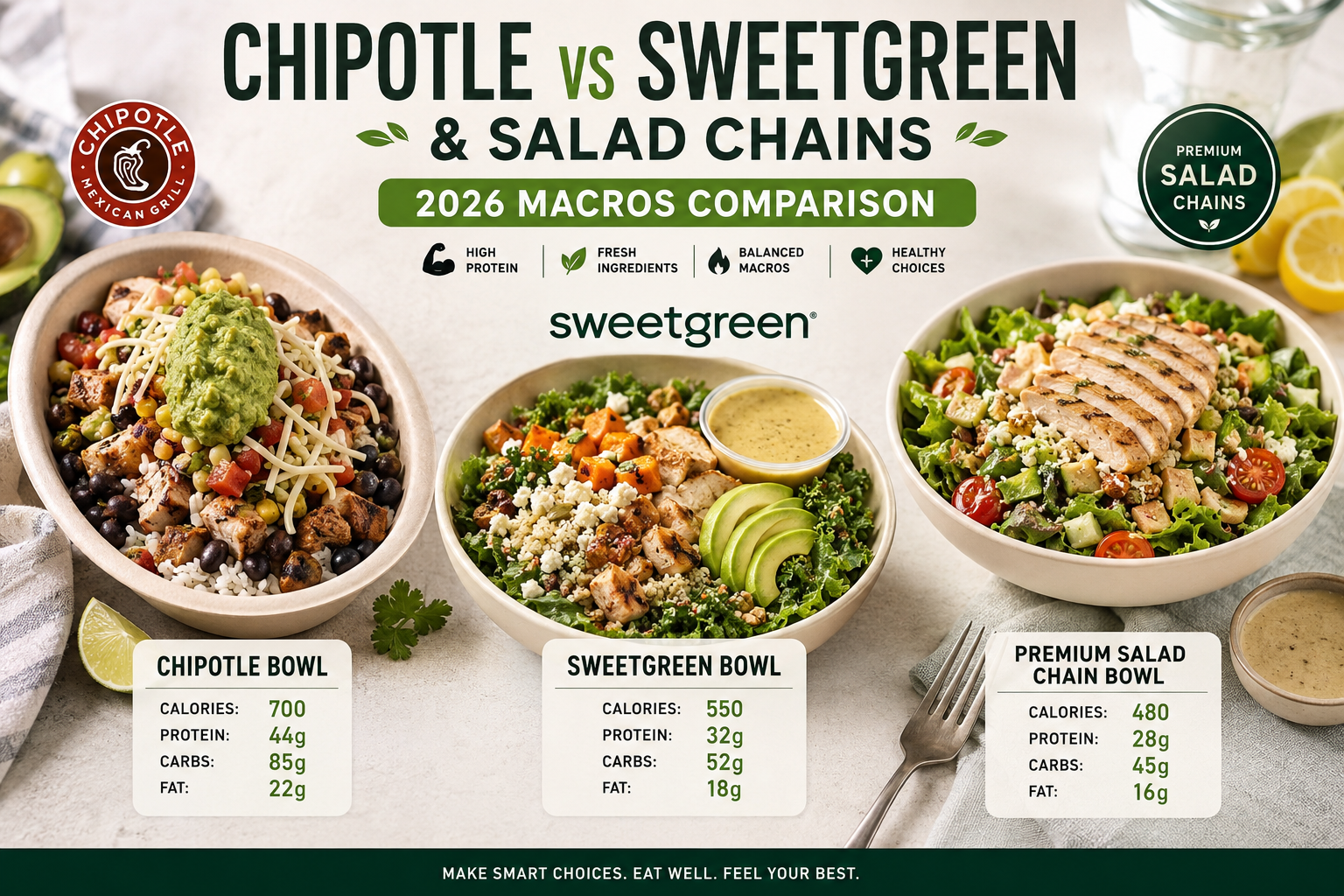
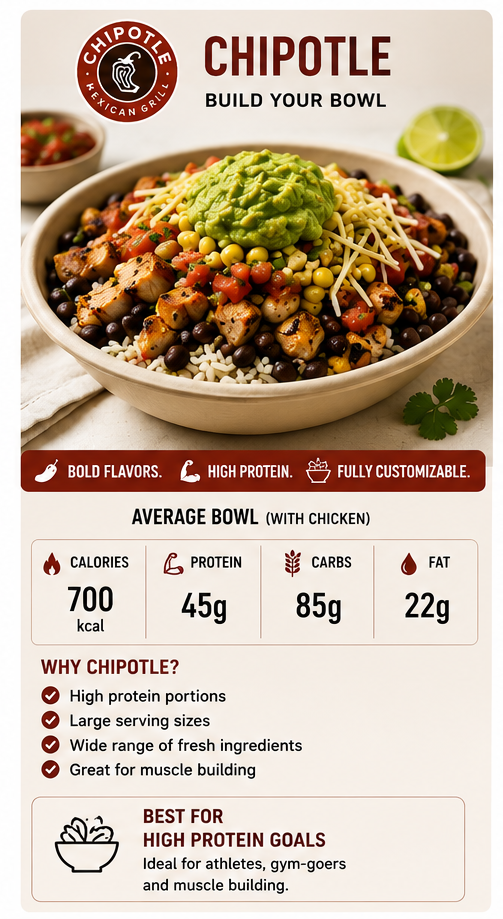
Chipotle remains one of the strongest performers when it comes to protein content. Its menu includes generous portions of grilled chicken, steak, barbacoa, carnitas, and other protein-rich ingredients. A standard Chipotle bowl can easily provide between 35 and 50 grams of protein.
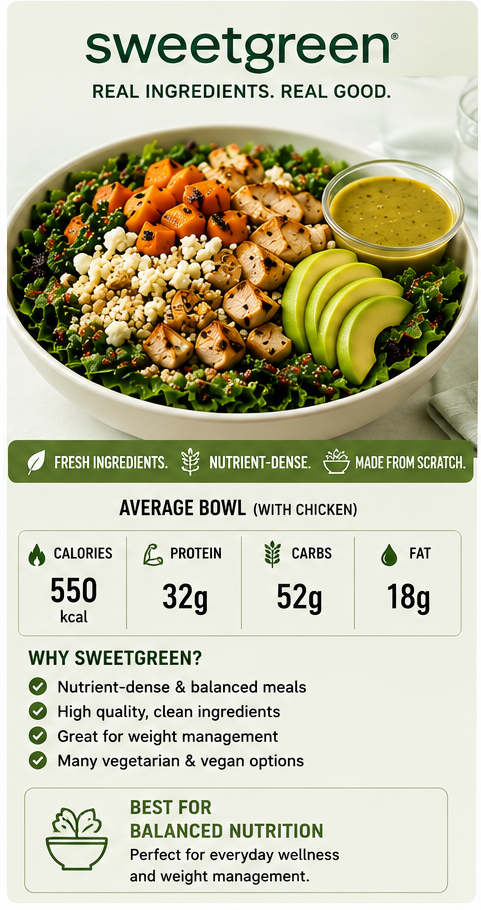
Sweetgreen also offers excellent protein choices, including grilled chicken, steak, salmon, tofu, and other lean protein sources. However, its serving sizes are generally smaller compared to Chipotle.
For people looking to maximise protein intake, Chipotle usually offers:
- Larger protein portions
- Higher total protein per meal
- Better protein value for the price
Sweetgreen, on the other hand, focuses more on creating balanced meals that combine quality protein with fresh vegetables and wholesome ingredients.
Calories, Carbohydrates, and Fat Comparison
When comparing Chipotle vs Sweetgreen nutrition, there are noticeable differences in calorie and macro content.
A typical Chipotle bowl may contain:
- 600 to 900 calories
- 35 to 50 grams of protein
- 50 to 90 grams of carbohydrates
- 15 to 35 grams of fat
A typical Sweetgreen bowl or salad may contain:
- 450 to 750 calories
- 25 to 45 grams of protein
- 30 to 70 grams of carbohydrates
- 15 to 30 grams of fat
One of the biggest factors affecting nutrition is customisation.
At Chipotle, ingredients such as rice, cheese, sour cream, and guacamole can significantly increase calorie and fat content.
At Sweetgreen, additional calories often come from:
- Salad dressings
- Nuts and seeds
- Grain toppings
- Premium ingredients
Both restaurants allow customers to customise meals, making it possible to create options that align with different dietary goals.
Best Choices for Weight Loss and Muscle Building
For Weight Loss
Sweetgreen often has an advantage because many of its salads are lower in calories while still providing plenty of vegetables and lean protein. These meals can help people feel full without consuming excessive calories.
For Muscle Building
Chipotle is a strong choice for muscle gain due to its larger serving sizes and high-protein options. Adding double protein can push a meal beyond 60 grams of protein, making it ideal for recovery and muscle growth.
For Balanced Nutrition
Both brands perform well when meals are customised carefully. The best option depends on your individual calorie and macro requirements.
Comparing Popular Salad Chains Beyond Sweetgreen
How Other Salad Chains Compare in 2026
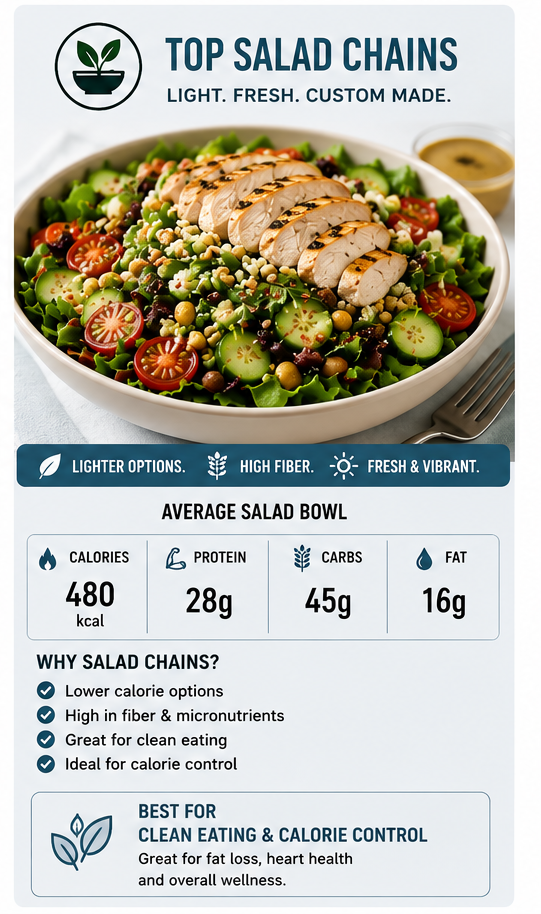
While Sweetgreen remains one of the most recognised healthy restaurant brands, several other salad chains are gaining popularity.
Many modern salad-focused restaurants now offer:
- Custom-built salads
- Grain bowls
- Lean protein options
- Plant-based alternatives
Compared to traditional fast food, these restaurants generally provide better nutritional quality and greater ingredient variety.
Serving sizes can vary significantly between brands. Some focus on lighter meals, while others offer larger portions designed for active individuals.
Which Salad Chain Offers the Highest Nutrient Density?
Nutrient density refers to the amount of beneficial nutrients a food provides relative to its calorie content.
The most nutrient-dense salad chains usually focus on:
- Fresh vegetables
- Whole grains
- Lean proteins
- Healthy fats
- Minimally processed ingredients
Restaurants that prioritise seasonal produce and fresh ingredients often perform best in this category.
Consumers are also paying closer attention to ingredient sourcing. Sustainable farming practices, local produce, and transparency in food preparation have become important factors when choosing where to eat.
Best Salad Chains for Different Health Goals
Fat Loss and Weight Management
For people aiming to lose weight, the best salad chains generally offer:
- Lower-calorie meals
- Lean proteins
- Plenty of vegetables
- Light dressings
High-Protein Meal Planning
Protein-focused diners should look for restaurants that offer:
- Double protein options
- Grilled meats
- Eggs
- Tofu
- Protein-rich toppings
Plant-Based Eating
Vegetarian and vegan options have improved significantly across the industry.
Popular plant-based ingredients include:
- Tofu
- Tempeh
- Lentils and legumes
- Plant-based protein alternatives
These ingredients help create balanced meals without relying on animal products.
Hidden Nutrition Factors Most Macro Trackers Overlook
Dressings, Toppings, and Extras
Many people focus only on the main ingredients and forget about the extras.
Even a healthy salad can become high in calories because of:
- Creamy dressings
- Cheese
- Nuts
- Crispy toppings
- Extra sauces
Making simple changes can have a significant impact on nutrition.
Consider:
- Ordering dressing on the side
- Choosing lighter vinaigrettes
- Reducing cheese portions
- Adding extra vegetables
These small adjustments can help improve the nutritional profile of your meal.
Sodium, Fibre, and Micronutrients
Macros are important, but they are only one part of a healthy diet.
Other nutrients deserve attention, including:
- Sodium
- Fibre
- Vitamins
- Minerals
Excess sodium may contribute to water retention and can be a concern for some individuals.
Fibre plays an important role in digestion, gut health, and appetite control. Meals rich in vegetables, legumes, and whole grains generally provide more fibre and better overall nutrition.
Portion Control and Smart Customisation
Understanding portion sizes is one of the most effective ways to manage calorie intake.
Some practical tips include:
- Start with a quality protein source
- Fill at least half the bowl with vegetables
- Choose whole grains when available
- Limit calorie-dense extras
- Be mindful of dressing portions
These simple habits can help you stay on track with your nutrition goals while still enjoying restaurant meals.
Best Fast-Casual Chain Based on Your Goal
Best Choice for High Protein
Winner: Chipotle
With larger serving sizes and generous protein portions, Chipotle remains one of the best high-protein fast food options available in 2026.
Best Choice for Weight Management
Winner: Sweetgreen
Sweetgreen’s lighter meals, fresh ingredients, and vegetable-focused menu make it an excellent choice for calorie-conscious diners.
Best Choice for Plant-Based Eating
Winner: Sweetgreen and Similar Salad Chains
These restaurants provide a wide range of vegetarian and vegan options that make macro tracking easier for plant-based consumers.
Best Overall Value for Nutrition
Winner: Depends on Your Goals
Chipotle excels in protein content and meal size.
Sweetgreen stands out for nutrient density, ingredient quality, and balanced nutrition.
Other healthy fast-casual restaurants may also offer unique benefits depending on your dietary preferences and lifestyle requirements.
Conclusion: Compare Chipotle, Sweetgreen & Salad Chains: 2026 Macros
When comparing Chipotle, Sweetgreen, and other leading salad chains, there is no single winner for everyone. Each restaurant offers different strengths based on individual nutrition goals.
Chipotle is ideal for those seeking high-protein meals, larger portions, and muscle-building support. Sweetgreen excels in providing fresh ingredients, nutrient-dense meals, and lower-calorie options that support weight management and overall wellness.
Ultimately, the best salad chains for macros are the ones that align with your personal health objectives. Whether your focus is weight loss, muscle gain, plant-based eating, or balanced nutrition, today’s healthy fast-casual restaurants offer more flexibility and transparency than ever before.
Before placing your order, take advantage of nutrition calculators and meal customisation tools. These resources can help you build meals that support your goals while still allowing you to enjoy delicious food.
Call to Action
Want to learn more about healthy dining and smart nutrition choices? Explore our latest guides on healthy fast-casual restaurants, macro-friendly meal planning, and fitness-focused eating habits.
Follow us on social media for the latest restaurant comparisons, nutrition insights, and wellness tips.
Subscribe to our newsletter to receive expert advice, healthy eating updates, and future guides on the best restaurants for weight loss, fitness, and overall health.